
Flucloxacillin for bacterial infections
This leaflet is for parents and carers about how to use this medicine in children. Our information may differ from that provided by the manufacturers, because their information usually relates to adults. Read this leaflet carefully. Keep it somewhere safe so that you can read it again.
If your child has ever had a reaction to any medicine, tell your doctor before giving Flucloxacillin.
Name of medicine
Flucloxacillin
Common brands: Floxapen, Fluclomix, Ladropen
Why is it important for my child to take Flucloxacillin?
It is important that your child takes this medicine in the way that your doctor has told you to so that it kills the harmful bacteria and gets rid of their infection.
What is Flucloxacillin available as?
- Capsules: 250 mg, 500 mg
- Liquid medicine (syrup or suspension): 125 mg, 250 mg or 500 mg in 5 mL; some may contain a small amount of sugar.
When should I give Flucloxacillin
Flucloxacillin is usually given four times a day. This is usually first thing in the morning (before breakfast), at about midday (before lunch), late in the afternoon (before tea) and at bedtime. Ideally, these times should be at least 3 hours apart.
How much should I give?
Your doctor will work out the amount of Flucloxacillin (the dose) that is right for your child. The dose will be shown on the medicine label.
It is important that you follow your doctor’s instructions about how much to give.
How should I give Flucloxacillin?

Capsules
- Capsules should be swallowed with a glass of water, squash or juice. Your child should not chew the capsule.
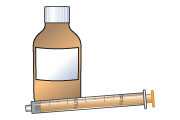
Liquid medicine
- Shake the medicine well.
- Measure out the right amount using an oral syringe or a medicine spoon. You can get these from your pharmacist. Do not use a kitchen teaspoon as it will not give the right amount.
It is important that you give your child the whole dose each time.
When should the medicine start working?
Your child should start to get better after taking the medicine for 2-3 days. It is important that they take the whole course of the medicine that has been prescribed. Do not stop early.
What if my child is sick (vomits)?
- If your child is sick less than 30 minutes after having a dose of Flucloxacillin, give them the same dose again.
- If your child is sick more than 30 minutes after having a dose of Flucloxacillin, do not give them another dose. Wait until the next normal dose.
If your child is sick again, seek advice from your family doctor, nurse, pharmacist, or hospital. They will decide what to do based on your child’s condition and the specific medicine involved.
What if I forget to give it?
If you miss a dose, wait until the next normal dose. Do not give the missed dose.
If you forget to give the dose before your child has eaten, give it during the meal or directly afterwards.
Never give a double dose of Flucloxacillin.
What if I give too much?
You are unlikely to cause harm if you give an extra dose of Flucloxacillin by mistake. If you are concerned that you may have given too much, contact your doctor or local NHS services (details at end of leaflet). Have the medicine or packaging with you if you telephone for advice.
Are there any possible side effects?
Side effects are rare with Flucloxacillin and do not usually last for long. They will get better after a day or two as your child’s body gets used to the medicine, and should go away when the treatment course is finished.
Side effects you must do something about
If your child gets swelling of the face, lips or tongue, a skin rash or itching, has difficulty breathing or has a fit (seizure), take them to hospital or call for an ambulance straight away, as they may be allergic to Flucloxacillin.
Contact your doctor if, in the month after finishing Flucloxacillin, your child shows yellowing of the skin or the whites of the eyes (jaundice) or has diarrhoea that goes on for more than 4 days, or if it contains blood. This is becauseFlucloxacillin may very occasionally cause liver or bowel problems.
Other side-effects you need to know about
Some children get diarrhoea, stomach pains and may feel sick or be sick (vomit) when they first start taking Flucloxacillin. See the information on antibiotics below for advice on what to do.
Contact your doctor if your child has diarrhoea that goes on for more than 4 days or if it is severe and watery, or contains blood.
You may see white patches inside your child’s mouth and throat, and girls may get itching or soreness around the vagina. This is caused by a fungal infection called thrush. Contact your doctor or pharmacist for advice.
There may sometimes be other side effects that are not listed above. If you notice anything unusual and are concerned, contact your doctor. You can report any suspected side effects to a UK safety scheme at mhra.gov.uk/yellowcard
Can other medicines be given at the same time as Flucloxacillin?
- You can give your child medicines that contain paracetamol or ibuprofen, unless your doctor has told you not to.
- Flucloxacillin should not be taken with some medicines. Tell your doctor or pharmacist about any other medicines your child is taking before giving Flucloxacillin.
Check with your doctor or pharmacist before giving any other medicines to your child. This includes herbal and complementary medicines.
Is there anything else I need to know about this medicine?
Flucloxacillin contains a type of antibiotic called penicillin. Your child should not have Flucloxacillin if they are allergic to any penicillin antibiotic. Make sure you tell your doctor if your child has ever shown any signs of penicillin allergy.
Your child should not have Flucloxacillin if they have ever had liver problems or jaundice (yellowing of the skin or whites of the eyes), other than jaundice in the few weeks after birth (which is normal).
General advice about antibiotics
- It is vital that your child completes the course of antibiotic. This means that they must take the medicine for the number of days that the doctor has told you, or until all the tablets or capsules have been taken.
- Your child will probably start to feel better soon after starting to take the antibiotic. However, it takes a few days for the antibiotic to kill all the bacteria.
- If you stop giving the antibiotic too soon, the bacteria that are left will start to multiply again, and may cause another infection.
- There is also a risk that these bacteria will be ‘resistant’ to the first antibiotic. This means that it might not work next time, and your child might need a different antibiotic, which might not work as well or cause more side effects.
- Children are sometimes sick (vomit) or get diarrhoea when taking antibiotics. Encourage them to drink water to replace the fluid they have lost. You can also buy oral rehydration fluid from your pharmacist.
- Do not give your child any medicine to stop the diarrhoea unless your doctor has told you to.
- Try to give the antibiotic at about the same time(s) each day, to help you remember, and to make sure that there is the right amount of medicine in your child’s body to kill the bacteria.
- Only give this medicine to your child for their current infection.
- Never save medicine for future illnesses. Give old or unused antibiotics to your pharmacist to dispose of.
- Only give the antibiotic to the child it was prescribed for. Never give it to anyone else, even if their condition appears to be the same, as it could do harm.
- Antibiotics only kill bacteria; they do not kill viruses. This means that they do not work against colds, sore throats, flu or other infections that are caused by viruses. Your doctor will not prescribe antibiotics for these illnesses.
If you think someone else may have taken the medicine by accident, contact your doctor for advice.
Where should I keep this medicine?
- Keep this medicine in a cupboard, away from heat, direct sunlight and excess moisture (do not keep it in the bathroom).
- You may need to keep liquid medicine in the fridge – check the instructions on the bottle. Make sure the medicine does not freeze.
- Make sure that children cannot see or reach the medicine.
- Keep the medicine in the container it came in.
Who to contact for more information?
Your child’s doctor, pharmacist or nurse will be able to give you more information about Flucloxacillin and about other medicines used to treat infections.
England: NHS 111
Tel 111
www.nhs.ukScotland: NHS 24
Tel 111
www.nhs24.scotNorthern Ireland: NI Direct
Wales: NHS 111 Wales
Tel 111
www.111.wales.nhs.ukCopyright disclaimer
Version [2]. © NPPG, RCPCH and WellChild, all rights reserved. Review by January 2017.
The primary source for the information in this leaflet is the British National Formulary for Children. For details on any other sources used for this leaflet, please contact us through our website, www.medicinesforchildren.org.uk.
We take great care to make sure that the information in this leaflet is correct and up-to-date. However, medicines can be used in different ways for different patients. It is important that you ask the advice of your doctor or pharmacist if you are not sure about something. This leaflet is about the use of these medicines in the UK, and may not apply to other countries. The Royal College of Paediatrics and Child Health (RCPCH), the Neonatal and Paediatric Pharmacists Group (NPPG), WellChild and the contributors and editors cannot be held responsible for the accuracy of information, omissions of information, or any actions that may be taken as a consequence of reading this leaflet.