
News
Read all the latest news from the Medicines for Children team
Filter by...
-
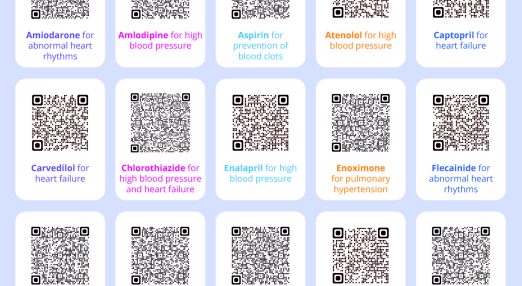
QR-code poster published for medicines to treat heart conditions
The Medicines for Children team have developed a new QR code poster for medicines used to treat heart conditions. This poster is made in collaboration with the East Midlands Congenital Heart Network, supported by funding from the Edith Florence Spencer Memorial Trust.
Read more
-

A new podcast in support of ‘Purple Day’
The Medicines for Children team have produced a podcast about a young person’s experience of living with epilepsy. In this 30 minute podcast, Fiona – a young person with epilepsy – and her mum, Karen, share their family's experience of living with epilepsy. This podcast is being released on ‘Purple Day’ - an international day dedicated to increasing awareness about epilepsy worldwide. We hope this podcast will be helpful for families living with epilepsy or for those who are adjusting to a new diagnosis.
Read more
-

Effervescent phosphate and calcium tablets – new information for parents and carers
Medicines for Children has published new information to help parents and carers when giving phosphate and calcium supplements to their children using effervescent tablets. Children and babies may need to be given extra phosphate or calcium for many different reasons and this information explains step-by-step how to make up the mixture and how to give the right amount to your child.
Read more
-

Asthma article 5: Make sure you’re not running on empty!
How do you know when asthma inhalers are empty? Some inhalers contain a propellant gas to deliver the asthma medicine into the lungs in a fine mist. However these inhalers can run out of medicine before the gas runs out. The inhaler will still look and sound like it is working, but you cannot tell if contains medicine or is just the delivery gas. As it is so difficult to tell whether an inhaler is empty, it is important to keep track of how much of the medicine your child uses, so that there is no risk of them running out.
Read more
-
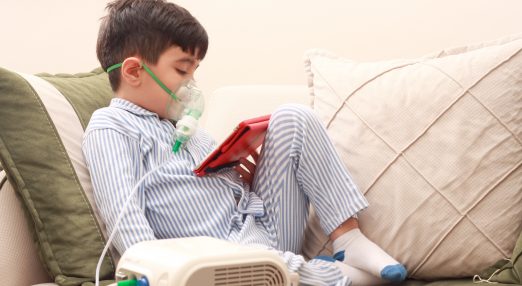
Asthma article 4: Warning against buying a nebuliser
The MHRA (Medicines and Healthcare products Regulatory Agency), which is responsible for the safety of medicines in the UK, has recently warned that parents should not buy their child a nebuliser to use at home. A child should only use a nebuliser if one has been prescribed by their asthma nurse or doctor.
Read more
-

Asthma article 3: Better asthma control = reduced environmental impact
Some types of inhalers have a bigger impact on the environment than others. However, the most important thing is that your child's asthma is kept under control by using the inhaler that works best for them. Better controlled asthma will improve your child's quality of life, but will also help to reduce the environmental impact. If their symptoms are well managed, they will need to use their reliever inhaler less frequently .
Read more
-

Asthma article 2: Disposing of asthma inhalers to reduce their environmental impact
Inhalers used for asthma usually contain gas (called propellant) which is needed to carry the medicine into the lungs in a fine spray. This gas can contribute to global warming. You can help reduce the environmental impact of inhalers by taking old inhalers to your local pharmacy to dispose of properly.
Read more
-

Asthma article 1: Helping your child with asthma through the winter
Many people find that their asthma symptoms get worse during the winter months. This is due to the cold weather, the increased circulation of cold and flu viruses and chest infections, and increased exposure to damp and mould. It is important that children and young people take their prescribed medicines, particularly the preventer inhaler, to keep their asthma symptoms under control and prevent asthma attacks.
Read more
-
Medicines for Children receives charity funding
Medicines for Children is delighted to have been awarded funding from the Edith Florence Spencer Memorial Trust to enhance our resources for children and young people with medical conditions including heart defects, heart disease, rheumatism and arthritis.
Read more
-

Shortages of Norditropin Flexpro and Nordiflex
Supplies of Norditropin Flexpro and Norditropin Nordiflex growth hormone (somatropin) will be limited in 2023 because of manufacturing issues. Your child may need to be prescribed other growth hormone products.
Read more
-

Antibiotics for Strep A infection
The recent increase in cases of Strep A infection has meant that more children than usual are being prescribed antibiotics. But this has meant that patients in some areas of the UK have had difficulties getting the antibiotics they have been prescribed.
Read more
-

Strep A – how worried should I be?
An increase in the number of cases of scarlet fever in children have been reported in the last few weeks. Scarlet fever is caused by a group of bacteria known as Group A Streptococcus (GAS), or Strep A.
Read more